
The vegetable beds
Eighteen beds, drip irrigated, mulched deep. In this climate the productive season is winter and the difficult season is summer, which is the opposite of what most people expect.
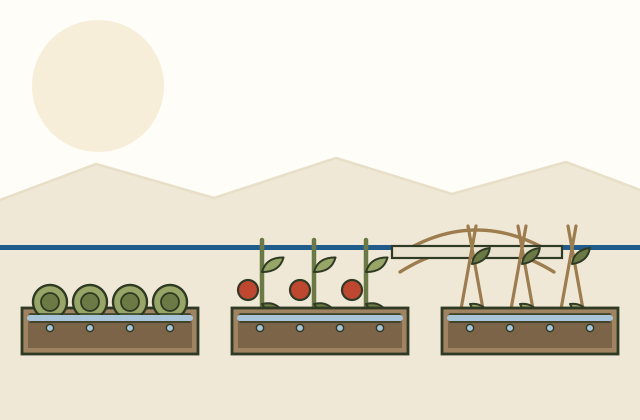
Best October to May 18 beds
This is the part of the smallholding that feeds us rather than the part that pays for it. Only the chillies make it into a jar.
How the beds are set up
Eighteen raised beds on the lowest terrace, each about eight metres by one point two, edged with local stone and boards. Raised, in a dry climate, is a slightly odd choice and we get asked about it. The answer is that the ground here is a shallow red clay over limestone and in places there is barely twenty centimetres of it. Building up was easier than digging down into rock.
Every bed is on drip line, two lines per bed, run off the lower tank on a timer that comes on before dawn. Watering in the evening in summer here means everything sits damp overnight in warm air, and that is how you get mildew. Watering at midday means most of it evaporates before it reaches anything. Before dawn is the answer and it took us two seasons to accept it.
Everything is mulched, and mulched thickly, four to five centimetres of straw and whatever prunings have been through the chipper. In July that mulch is the difference between soil at 24 degrees and soil at 34 degrees at ten centimetres down. We have measured it. It is the single most useful thing we do in these beds.
The winter garden, which is the real one
From October through to May the beds do most of their work. That is the growing season here in the same way that May to September is the growing season in northern Europe, and the list of what does well is a northern spring list:
- Brassicas from October. Kale, cavolo nero, purple sprouting, and enough cabbage to be sick of cabbage by February.
- Broad beans sown in November, picked from late February.
- Salad leaves and rocket right through the winter, which is the thing we would miss most.
- Onions and garlic in from November, lifted in May.
- Carrots, beetroot and turnip, sown in succession from September to January.
- Peas, when we remember to sow them early enough, which is roughly one year in two.
The summer garden, which is mostly survival
June, July and August are not a growing season here, they are a holding operation. Air temperatures over 40 degrees stop tomatoes setting fruit entirely. Lettuce bolts in days. Anything with a shallow root and a big leaf gives up. What actually works in summer is a short list:
- Tomatoes, if they are in by March so they crop before the worst of it. After mid July they stop setting and just hold what they have.
- Peppers and chillies, which want the heat and are the most reliable summer crop we have. The chillies are the only thing from these beds that ends up in a jar, in the chilli oil.
- Aubergines, slowly.
- Climbing beans on canes, with shade cloth over them from mid July.
- Squash and pumpkins, sprawling across the ground where their own leaves shade the soil.
From about the middle of July we put shade cloth on hoops over four of the beds. Thirty per cent shade, which does not sound like much and changes everything. There is a full write up of the August routine in the note on keeping a bed alive in August.
What a bed costs in water
In January a bed takes almost nothing. In August the same bed takes around 60 litres a day, and the eighteen beds together are the second biggest draw on the water after the citrus. That number is why the beds are the size they are and not larger.
What we do not do
We do not sell vegetables. We have thought about it several times and every time the arithmetic has said no. The volumes are small, they are seasonal in a way that does not match anyone's shopping, and the beds are already doing the job we want them to do, which is feeding the household and the preserving days. If that changes we will say so here.
We also do not grow anything under glass or plastic, apart from the shade cloth. Not out of principle, just that the climate does not really call for it and a polytunnel here in August would be an oven.
Where to next
Mulch depth, shade cloth, watering before dawn, and what we gave up on.
The one thing from these beds that goes into a bottle.
The soil, the water and why the beds are raised.