
Olive harvest and pressing day
The hardest of the four days and the one that shows you the whole chain, from the tree to the net to the crate to the mill, inside a single day.
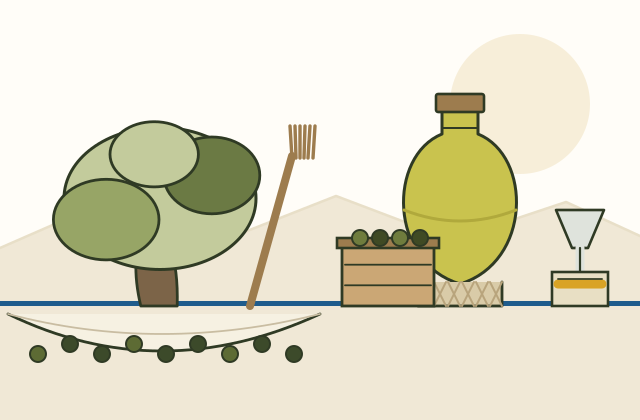
This is a working day, not a demonstration. We pick the trees we were going to pick anyway, and the day exists because the work goes faster with more hands.
What the day looks like
- 9.00. Coffee, and ten minutes on what we are doing and why the date matters. Then straight out to the rows.
- 9.30 to 12.30. Nets down, hand rakes through the branches, working a row at a time. This is most of the day and it is repetitive. Two breaks in it.
- 12.30. Gathering the fruit off the nets, picking out leaves and twigs, weighing and crating. This is the part where you see how little you actually got, which is a useful lesson.
- 13.00. Lunch, outside if the weather allows. Bread, cheese, something from the vegetable beds, our own oil, and wine if you want it.
- 14.15. To the mill with the morning's fruit. We watch it go in and we taste the oil coming out, which is the point of doing this in November rather than at any other time.
- 16.00. Back, and done.
What you actually do
You spread nets, you comb branches with a hand rake, you gather fruit, and you carry crates. There is no machinery involved because at 96 trees there is no case for any. It is shoulder and forearm work and most people find the second hour harder than the first.
You are not being given a token job while we do the real one. The fruit you pick goes in the same crates as ours and gets pressed the same afternoon. If it rains and we cannot use the nets, we do not run the day, and that is explained below.
What you take home
- A 500 millilitre bottle of the previous season's cold pressed oil. It has to be last year's, because this year's will not be racked and bottled until December.
- A jar of table olives from the October cure.
- A fairly precise sense of why olive oil costs what it does.
What to wear and bring
- Closed shoes with a grip. The terraces are uneven and the ground under the nets is stony.
- Long sleeves and long trousers. Olive branches scratch.
- A hat. November here is still bright and the light comes off the nets.
- Gardening gloves if you have a pair you like. We have spares.
- A jumper for the morning. It can be nine degrees at nine and twenty two by lunchtime.
Weather
This is the one day of the four that we cancel for rain. Wet nets do not work, wet fruit picks up grit and leaf, and standing under a dripping olive tree for three hours is nobody's idea of a good Saturday. If the forecast is clearly wet we will tell you by the Thursday and move you to another date or refund you in full.
We do run it in cold and in wind. It is only rain that stops it.
Who this day is not for
It is genuinely physical and it lasts seven hours. If standing, bending and reaching for three hours in the morning is not something you want to do, take the orange picking morning instead, which is three hours and much gentler.
We do not take children under twelve on this day. There are ladders, rakes with metal tines, and a mill visit at the end where you have to stay out of the way of people working. Over twelve is fine if they actually want to be there.
The terraces are steep and the ground is rough. There is no way to make this day accessible to someone with limited mobility and we would rather say that clearly than have you find out on arrival.
How to book
Email hello@nossoparaiso.com with the date you want and how many of you there are, or use the form on the contact page. We reply within a couple of days.
We hold the place while we confirm, then ask for the full amount by bank transfer. There is no online booking system and no card payment on the day.
Cancel more than seven days before and you get everything back. Inside seven days we refund half, because at our group sizes an empty place is a place nobody else could take. If we cancel for any reason you get everything back. This is set out again on the questions page and in the terms.
Why November
Because that is when the fruit is at the point we want it, turning from green to purple and not yet black. The reasoning, and what it costs us in yield, is on the olive page. If you come in November you see the decision being made rather than described.
Where to next
Ninety six trees, three varieties, and why we pick early.
What comes out of the day, six weeks later.
The gentler one, three hours in January.