
Keeping a vegetable bed alive in August
It is 38 degrees outside. August here is not a growing month, it is a holding operation, and knowing that changes what you do.
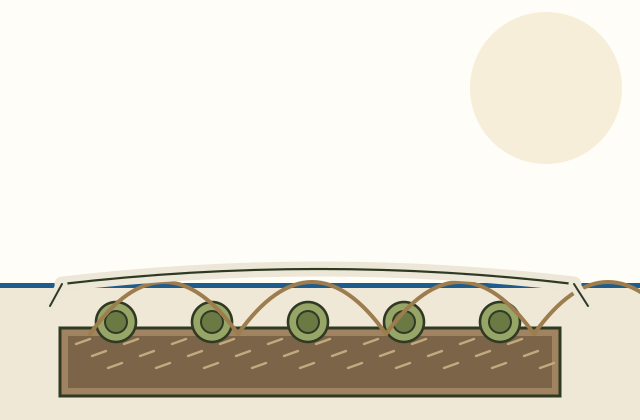
Everything written about vegetable growing in English assumes August is the abundant month. Here it is the month you are trying to get through. Soil temperatures at ten centimetres go over 30 degrees, air temperatures pass 40 for days at a time, and there has been no rain since April. The plants that survive are not the ones you would expect, and the useful skill is knowing what to give up on.
Mulch, and how deep
Four to five centimetres of straw over every square centimetre of bare soil. Not two, which is what we did for our first two summers and which does almost nothing. Five.
We measured it this week with a soil thermometer, in two of the beds on the same afternoon, at ten centimetres down. Mulched bed, 24 degrees. Unmulched bed a metre away, 34. Roots stop working properly above about 30, which means the unmulched bed was not growing anything at all in the middle of the day regardless of how much water it got.
Mulch goes on top of the drip line, not under it. Water goes into the soil under the mulch and evaporation has to get back out through five centimetres of straw, which it largely does not.
Shade cloth
Thirty per cent shade on hoops over four beds from the middle of July. Thirty per cent sounds trivial and it is the difference between a pepper plant that keeps setting fruit and one that stops.
Not fifty per cent, which we tried in 2023 and which was too much: everything went leggy and pale and the tomatoes stopped ripening properly. Not shade netting laid straight on the plants, which cooks them where it touches. On hoops, thirty centimetres clear, with air moving underneath.
It goes on in the second week of July and comes off in the middle of September.
Water, before dawn
The timer runs at half past four in the morning. Around 60 litres a day per bed in August, on drip lines under the mulch, which is far more than these beds take in any other month and is the second largest draw on our water after the citrus.
Evening watering is the mistake people make here, because it feels kind at the end of a hot day. It leaves foliage and soil surface damp overnight in air that is still 25 degrees, and that is a fungal problem waiting to happen. Midday watering mostly evaporates. Before dawn is the only slot that works and the timer is worth more than any other piece of equipment in the garden.
What we measured this week
- Air, 15.00
- 38 degrees in the shade
- Soil, mulched, 10 cm
- 24 degrees
- Soil, bare, 10 cm
- 34 degrees
- Under shade cloth, 15.00
- 32 degrees
- Water per bed, per day
- About 60 litres
What actually survives
- Chillies and peppers. The best summer crop we have by a distance. They want the heat and they set fruit when nothing else will. Ours end up in the chilli oil.
- Aubergines, slowly but reliably.
- Tomatoes, only if they were planted in March and are already carrying fruit. Above about 35 degrees the pollen is not viable and they stop setting entirely. They will hold and ripen what they have and set nothing new until September.
- Climbing beans on canes, under shade cloth, watered generously.
- Squash and pumpkins, sprawling, where their own leaves shade the ground.
- Basil, oregano and rosemary, which barely notice.
What we stopped trying
Lettuce and salad leaves. They bolt in three days. We grow them from October to May instead and do not miss them in summer, because there is nothing else to eat them with anyway.
Brassicas of any kind. Anything with a big soft leaf and a shallow root is spending the day trying not to die.
Anything newly transplanted. A young plant put out in August has no root system and cannot keep up with what its leaves are losing. Everything for autumn gets sown in trays in the shade in late August and planted out in the second half of September, once the nights come down.
Do not feed
We stop feeding entirely from the beginning of July. A plant under heat stress cannot use nitrogen and pushing it into soft growth in these temperatures makes things worse, not better. Feeding starts again with the September sowings.
The honest summary
August is a month of keeping things alive rather than growing anything. The productive season here runs from October to May and that is when the beds earn their keep. Once we accepted that and stopped trying to run a northern European summer garden in a place that does not have one, everything got easier and we wasted much less water.
Where to next
All eighteen, and what goes in through the winter.
The same problem at orchard scale.
Where the chillies end up.