
Honey and the hives
Nine hives, sitting on the top terrace behind the almonds. They are here first for pollination and second for honey, and in a bad spring we take none.
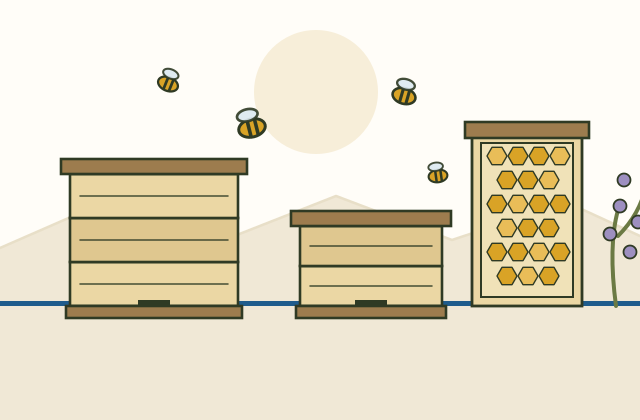
Extracted in June Nine hives
We are not beekeepers who also farm. We are people with an orchard who keep bees because the orchard needs them, and the honey is the second reason rather than the first.
Why there are hives at all
Almond blossom opens here in the middle of January, when it is cold and often wet, and it needs insects working it to set a crop. Wild pollinators are around but not in the numbers you want in the middle of winter. Nine hives sitting fifty metres from the almond terraces changes what happens in that fortnight, and the difference between a worked blossom and an unworked one is the difference between a crop and no crop. That is the whole argument, and it is written out in more detail on the almond page.
The citrus flowers in April and gets worked as well, though citrus is far less dependent on it. The vegetable beds get the benefit for free.
What the bees do across the year
The year here does not look like a northern European bee year. There is forage in January, which surprises people, and a genuine gap in high summer when everything has burned off and there is nothing flowering at all. The full month by month version is in a separate note, but roughly:
- January and February. Almond and rosemary. The colony builds early because there is something to build on.
- March to May. Citrus, wildflowers on the uncut ground, and whatever is in the hedges. This is where the honey comes from.
- June. Extraction, once, and then we leave them alone.
- July to September. The hard part. Nothing flowering, heat above 40 degrees, and the colony is living on what it has. We shade the hives and check water.
- October to December. Some autumn forage after the first rain, then quiet.
One extraction a year
We take honey once, in the middle of June, and only frames that are properly capped. Everything else stays. In a spring with no rain there is nothing spare and we take nothing at all, which is what happened in 2025.
What the honey is like
It is a mixed spring honey and it changes noticeably year to year, because it depends entirely on what flowered and when. In a wet spring there is more wildflower in it and it is lighter and more floral. In a dry spring the citrus and the rosemary dominate and it comes out darker and stronger. We do not blend across years to even that out, so the jar you get in one season will not taste the same as the last one. That is a feature as far as we are concerned, but it does mean we cannot promise you a consistent product.
It is extracted cold, strained through a coarse mesh to take out wax and the occasional bee, and jarred. It is not pasteurised, not filtered fine, and it will crystallise, usually within four to eight months. Crystallised honey is not spoiled honey. Stand the jar in warm water if you want it runny again.
What a bad year looks like
In 2025 we took nothing. The spring was dry, the wildflowers came and went in about three weeks, and by the time we opened the hives in June there were no full frames worth taking that the colonies would not need themselves through the summer. Taking honey in that situation means feeding sugar back in August, which is a pointless exchange.
We also lost two colonies over the 2024 to 2025 winter, one to what we are fairly sure was a wasp problem and one for reasons we never worked out. We rebuilt to nine over the following spring from splits.
This year has been better. There was rain in the 2025 to 2026 winter, the spring lasted properly, and we took 112 kilos in June across the nine hives. Honey is in the pantry again after a year without it.
About the jars
Sold in 350 gram jars. The label says the year and nothing else, because that is the only thing that reliably tells you what is in it. When the year runs out we do not have any until the following June, and we would rather say that than buy in someone else's honey to fill the gap.
One thing worth stating plainly because it matters: honey is not suitable for children under one year old. That is a general rule about all raw honey and not something specific to ours.
Where to next
One extraction a year, 350 gram jar, labelled by year.
The month by month version, including the summer gap.
The crop the hives are really here for.